RCB vs SRH Who Will Win Today Match? Expert Prediction & Key Players
The RCB vs SRH Who Will Win Today Match? Expert Prediction & Key Players focuses on high-intent user queries around
Read More
| Year | Winner | Runner-Up | Winning Captain |
|---|---|---|---|
| 2025 | Royal Challengers Bengaluru | Punjab Kings | Rajat Patidar |
| 2024 | Kolkata Knight Riders | Sunrisers Hyderabad | Shreyas Iyer |
| 2023 | Chennai Super Kings | Gujarat Titans | MS Dhoni |
| 2022 | Gujarat Titans | Rajasthan Royals | Hardik Pandya |
| 2021 | Chennai Super Kings | Kolkata Knight Riders | MS Dhoni |
| 2020 | Mumbai Indians | Delhi Capitals | Rohit Sharma |
| 2019 | Mumbai Indians | Chennai Super Kings | Rohit Sharma |
| 2018 | Chennai Super Kings | Sunrisers Hyderabad | MS Dhoni |
| 2017 | Mumbai Indians | Rising Pune Supergiant | Rohit Sharma |
| 2016 | Sunrisers Hyderabad | Royal Challengers Bangalore | David Warner |
| 2015 | Mumbai Indians | Chennai Super Kings | Rohit Sharma |
| 2014 | Kolkata Knight Riders | Kings XI Punjab | Gautam Gambhir |
| 2013 | Mumbai Indians | Chennai Super Kings | Rohit Sharma |
| 2012 | Kolkata Knight Riders | Chennai Super Kings | Gautam Gambhir |
| 2011 | Chennai Super Kings | Royal Challengers Bangalore | MS Dhoni |
| 2010 | Chennai Super Kings | Mumbai Indians | MS Dhoni |
| 2009 | Deccan Chargers | Royal Challengers Bangalore | Adam Gilchrist |
| 2008 | Rajasthan Royals | Chennai Super Kings | Shane Warne |
The Indian Premier League (IPL) is the most influential and commercially successful T20 cricket league in the world. Launched in 2008, the IPL revolutionized the sport by blending high-quality cricket, global stars, and franchise-based competition into a single, highly engaging tournament.
Played annually in India, the IPL attracts the best players from across the globe and commands a massive worldwide audience. Its fast-paced format, competitive balance, and entertainment value have reshaped modern cricket.
Over the years, the IPL has become a benchmark for professional T20 leagues worldwide.
The IPL was established to create a domestic T20 league that could compete with global sports entertainment. It was designed to promote cricket as a spectator-friendly product while ensuring financial sustainability for players and administrators.
The introduction of player auctions, franchise ownership, and salary caps brought a new professional structure to cricket.
From its very first season, the IPL demonstrated the immense commercial and sporting potential of franchise cricket.
The IPL follows a league-and-playoffs format. Teams compete in a round-robin league phase, followed by a knockout playoff stage featuring the top-ranked teams.
Each match is played in the Twenty20 format, emphasizing aggressive batting, tactical bowling, and athletic fielding.
The structure ensures a balance between consistency and high-pressure knockout cricket.
The league consists of multiple city-based franchises, each representing a major cricketing market in India. Teams are built through player auctions, trades, and retention policies.
This system promotes competitive balance by preventing talent concentration and encouraging strategic team building.
Franchises invest heavily in scouting, coaching, and analytics to gain a competitive edge.
One of the defining features of the IPL is its player auction system. Domestic and international players are bid on by franchises within a regulated salary cap.
This process creates excitement while ensuring financial parity across teams.
Smart auction strategies often determine a team’s long-term success in the tournament.
The IPL has played a transformative role in developing young talent. Emerging players gain exposure to world-class coaching, elite opposition, and high-pressure situations.
Many cricketers have used IPL performances as a springboard to international careers.
The league accelerates skill development, particularly in power-hitting, death bowling, and fielding.
The IPL has influenced how T20 cricket is played globally. Innovations in batting techniques, bowling variations, and tactical approaches often originate in the IPL.
International teams now prioritize T20 skills developed in franchise leagues.
The tournament has also reshaped cricket scheduling and player workload management worldwide.
Beyond cricket, the IPL is a major economic force. It generates revenue through broadcasting rights, sponsorships, ticket sales, and merchandise.
The league has created opportunities across media, marketing, and sports management industries.
Its financial success has inspired similar leagues in other cricket-playing nations.
The IPL enjoys massive fan engagement both in stadiums and through digital platforms. Social media, fantasy leagues, and interactive content keep fans connected throughout the season.
The league’s global broadcast reach ensures international visibility for players and franchises.
This worldwide following has elevated the IPL into a truly global sporting property.
Since its inception, the IPL has continuously evolved. Changes in team composition, rules, and technology have kept the tournament fresh and competitive.
The introduction of new franchises and venues has expanded the league’s footprint.
These adaptations ensure the IPL remains relevant in an ever-changing sports landscape.
The IPL combines elite cricketing talent, financial strength, and unmatched entertainment value. Its competitive balance ensures that every season remains unpredictable.
For players, it offers exposure and growth. For fans, it delivers high-intensity cricket and emotional connection.
The Indian Premier League continues to define the future of T20 cricket.
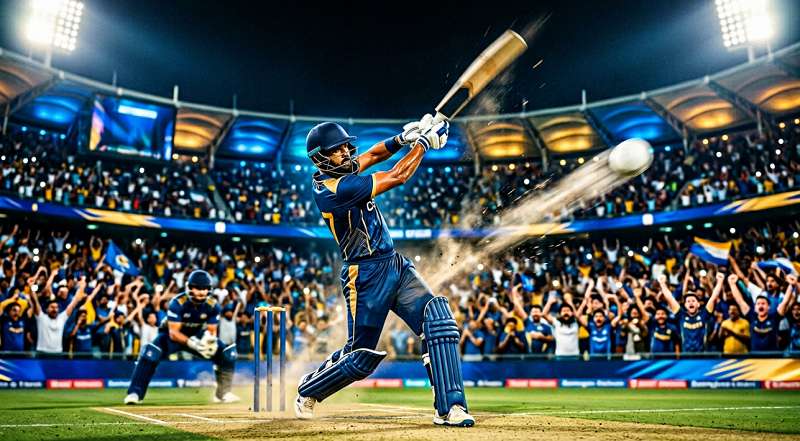
The RCB vs SRH Who Will Win Today Match? Expert Prediction & Key Players focuses on high-intent user queries around
Read More
The RCB vs SRH Pitch Report, Weather Update & Toss Prediction – Bengaluru Stadium provides complete match-day insights for fans,
Read More
Cricket is a global sport played across multiple formats, countries, and competitions throughout the year. From high-intensity international tournaments to
Read More